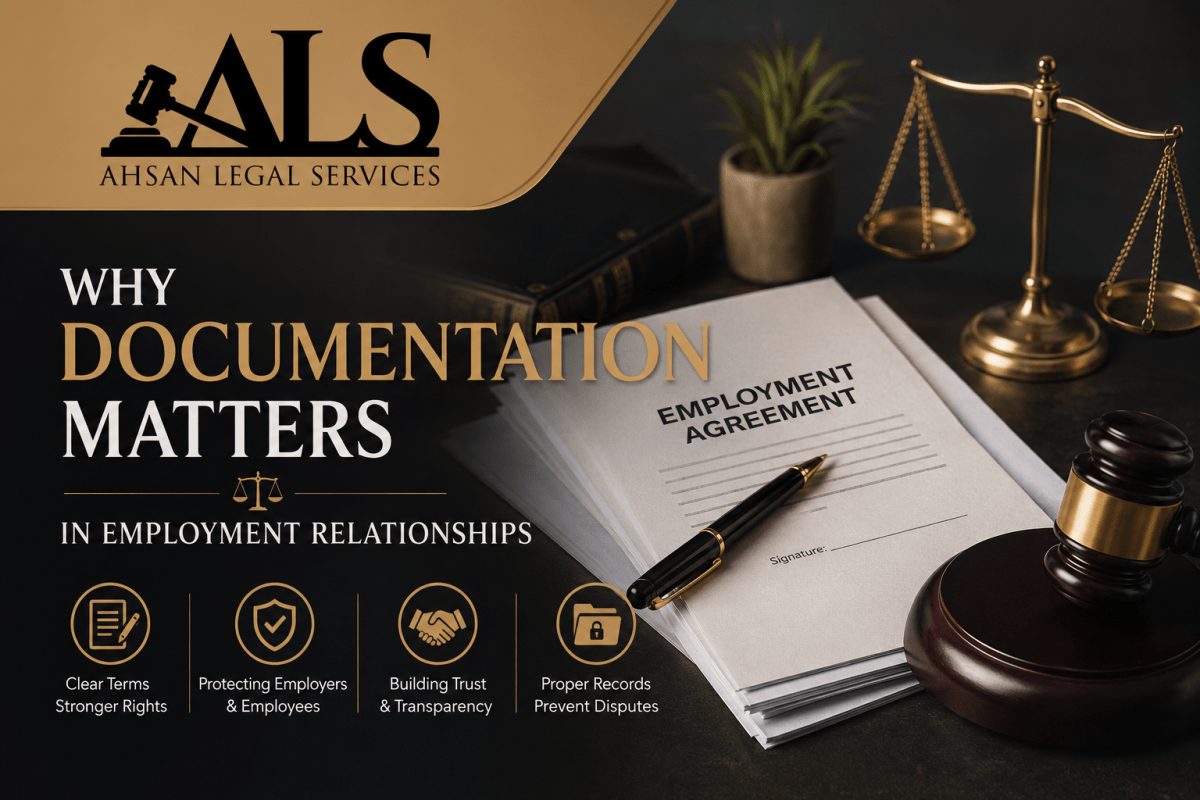
In many employment disputes, the actual problem is not always misconduct, poor performance, or bad intentions.
Often, the core issue is the absence of proper documentation.
Employers and employees frequently rely on verbal understandings, informal commitments, or incomplete records. While this may appear convenient at the beginning of an employment relationship, it can create serious complications later regarding salary, duties, termination, confidentiality, benefits, or workplace expectations.
Proper employment documentation is not merely a corporate formality. It is a practical mechanism that protects both parties, promotes transparency, and reduces the likelihood of future disputes.
1. Appointment Letters Establish Clarity
One of the most essential employment documents is the appointment letter.
An appointment letter formally outlines:
- Job title and designation
- Salary structure
- Date of joining
- Working hours
- Probation terms
- Reporting structure
- Employment conditions
Without a written appointment letter, misunderstandings often arise regarding:
- Agreed salary
- Scope of responsibilities
- Nature of employment
- Benefits and allowances
- Confirmation status
For employers, appointment letters help maintain organizational discipline and consistency.
For employees, they provide evidence of agreed employment terms and professional security.
A properly drafted appointment letter creates clarity from the very beginning of the employment relationship.
2. Salary Structure Transparency Prevents Future Conflicts
Many workplace disputes arise because salary components were never clearly documented.
Employees may misunderstand:
- Basic salary
- Bonuses
- Incentives
- Allowances
- Deductions
- Tax obligations
Similarly, employers may face difficulties when payroll records are incomplete or inconsistently maintained.
A transparent salary structure helps:
- Build trust
- Ensure compliance
- Prevent disputes over compensation
- Support proper tax and HR management
Employers should maintain proper payroll documentation, while employees should carefully review salary-related terms before accepting employment offers.
Clear financial documentation protects both sides from future disagreements.
3. Confidentiality Clauses Protect Sensitive Information
In modern workplaces, employees often gain access to:
- Client information
- Financial records
- Internal business strategies
- Trade secrets
- Operational data
Without confidentiality provisions, businesses may become vulnerable to misuse or unauthorized disclosure of sensitive information.
Confidentiality clauses help define:
- What information is confidential
- Employee responsibilities regarding data protection
- Restrictions after employment ends
- Legal consequences of unauthorized disclosure
At the same time, such clauses should remain reasonable and professionally drafted. Overly broad or unfair restrictions may create unnecessary tension or legal complications.
Balanced documentation ensures both protection and fairness.
4. Notice Period Provisions Reduce Workplace Disruption
One of the most common employment disputes concerns resignations and terminations.
In the absence of written notice period provisions:
- Employers may face operational disruption
- Employees may face sudden financial uncertainty
- Final settlements may become contentious
A clear notice period clause helps establish:
- Required advance notice
- Salary in lieu of notice
- Handover responsibilities
- Exit procedures
This promotes professionalism and allows both parties adequate time to transition responsibly.
Employment relationships may end, but proper documentation helps ensure that the process remains orderly and respectful.
5. Performance Expectations Should Be Clearly Defined
Employees perform more effectively when expectations are properly communicated.
Organizations should clearly document:
- Job responsibilities
- Performance standards
- Reporting obligations
- Workplace policies
- Compliance expectations
When expectations are vague, disciplinary actions or performance evaluations may later appear arbitrary or unfair.
Clear documentation:
- Encourages accountability
- Supports performance management
- Reduces misunderstandings
- Improves workplace productivity
Proper records also help organizations justify employment decisions if disputes arise in the future.
6. Exit Obligations Matter More Than Many Realize
Employment documentation should not only focus on hiring — it should also address separation procedures.
Exit-related provisions may include:
- Return of company property
- Confidentiality obligations after resignation
- Final settlements
- Pending dues
- Restrictive covenants where legally appropriate
Without proper exit documentation, disputes regarding payments, records, or responsibilities may continue long after employment ends.
Structured exit procedures help organizations maintain professionalism while protecting their operational interests.
7. Documentation Protects Both Employers and Employees
A common misconception is that employment documentation primarily benefits employers.
In reality, proper documentation protects both sides equally.
For employers, it helps:
- Maintain organizational discipline
- Reduce legal exposure
- Support compliance
- Improve HR management
For employees, it helps:
- Protect agreed rights and benefits
- Clarify responsibilities
- Ensure transparency
- Provide documentary evidence in disputes
Professional employment relationships function more effectively when expectations are documented rather than assumed.
Conclusion
Strong employment relationships are built on clarity, professionalism, and mutual understanding.
Documentation is not a sign of distrust.
It is a mechanism that promotes transparency, accountability, and legal certainty.
Whether for startups, corporations, small businesses, or professional organizations, properly structured employment documentation can significantly reduce misunderstandings and prevent avoidable disputes.
In today’s professional environment, organizations that prioritize proper documentation are generally better equipped to maintain stable and legally compliant workplaces.
Keywords: Employment Law, HR Compliance, Employment Contracts, Workplace Documentation, Corporate Law, Pakistan Employment Law, Legal Compliance, HR Policies
 Ahsan Legal Services